
It's an interesting theory but the reality isn't so simple, say experts.

The rupee had last ended at 67.22 per dollar on March 16, 2016.
The rupee's slide was predictable in direction, if not in timing. It has been obvious for months that India was vulnerable to depreciation. A combination of European weakness and bearish FII attitudes were the triggers.
Concerned over the washout of Parliament this week, Finance Minister Pranab Mukherjee on Saturday said Parliament is not meant for "disruptions" and also appealed to his "political colleagues" to keep aside politics from major economic decisions.
RBI Governor Rajan on Wednesday said significant progress made in curbing current account deficit.

India's forex reserves increased $591 million to $616.733 billion for the week ended January 26, the Reserve Bank of India (RBI) said on Friday. In the previous reporting week, the overall reserves had dropped $2.79 billion to $616.14 billion. The country's forex kitty had reached an all-time high of $645 billion in October 2021.

Indian economy is projected to grow 7.1-7.6 per cent in the current financial year despite shifting geopolitical realities across the world, a report said on Wednesday. In its India's economic outlook - July 2022 report, leading consultancy Deloitte India said that as 2021 was coming to a close, there was optimism in the air but the optimism received a jolt early this year as a wave of Omicron infections swept through the country and Russia's invasion of Ukraine happened in February. "These events aggravated the pre-existing challenges such as surging inflation, supply shortages, and shifting geopolitical realities across the world with no definite end in sight.
NRIs can lock into NRE/NRO fixed deposits, buy real estate and invest in long-term equity investments.
Veerappa Moily's allegation that an import lobby was against an increase in gas prices has found no takers among sectoral experts.
In the medium term what will truly matter for the rupee's fortunes are India's growth and inflation fundamentals.

SBI managing director PK Gupta told reporters that the rupee has been faring better than many of its peers, including the Turkish, Argentinean, and Indonesian currencies.

RBI is expecting the rupee to stay close to Rs 75 to a dollar, as COVID-19 forces foreign funds to withdraw from emerging markets.
Ford India will increase the price of its entry-level sedan Ikon by up to 1.5 per cent from April as it looks to offset rising component import bills due to rupee depreciation.
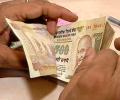
Remittance into India from foreign countries has already seen a jump of 25% in the last two months

There are some advantages of a falling rupee.
Outbound travel falls 10 per #162 reasons vary from economic downturn, rupee and a rise in air fare.
The domestic car market, which sees sales of almost one diesel car for every petrol car sold, will see demand for diesel-powered cars to hit the roof.

With rupee depreciation leading to jump in oil import bill, Petroleum Minister S Jaipal Reddy on Tuesday said there is an immediate need to raise fuel prices, but refused to say when the hike will actually take place.

Among the 30 Sensex companies, Larsen & Toubro, Power Grid, NTPC, State Bank of India, Reliance Industries and HDFC Bank were the biggest laggards. Sun Pharma and Nestle were the only gainers.

The dollar was weak against major world currencies.
CRR cut does not rule out open market operations.

'There can be no dispute over the adverse impact such a policy will surely have on India's manufacturing competitiveness,' notes A K Bhattacharya.

Powered by a rally in index heavyweight Reliance Industries, equity benchmark Sensex broke its four-session losing run to close above the 55,000-mark on Thursday despite a weak trend overseas. Investors made a cautious return to IT, pharma and bank stocks after their recent sell-off. However, a depreciating rupee and persistent foreign fund outflows capped the gains, traders said. Overcoming a lacklustre start, the 30-share BSE Sensex surged 427.79 points or 0.78 per cent to close at 55,320.28.

Market benchmarks Sensex and Nifty wilted under selling pressure on Friday after a five-day rally as investors pared exposure to banking, financial and consumer durable stocks amid mixed trends in global markets. Rising global crude prices, a depreciating rupee and persistent foreign fund outflows further weighed on sentiment, traders said.

The price rise measured in terms of Wholesale Price Index rose for the second straight month, to 5.79 per cent in July, on account of double digit rise in prices of food articles, mainly vegetables, including onion.

One of the reasons is the increasing number of upgrades in analysts' recommendations.

Air India had last year faced about two-month-long strike by its pilots.

India's forex reserves jumped $1.63 billion to $618.94 billion for the week ended January 12, the Reserve Bank of India (RBI) said on Friday. In the previous reporting week, the overall reserves had declined sharply by $5.89 billion to $617.3 billion. The country's forex kitty had reached an all-time high of $645 billion in October 2021.

Textile exports are expected to reach $50 billion by 2014-15 on the back of new markets.
General Motors India on Friday said it will hike the prices of its entire range of models by up to Rs 20,000 with effect from October 8 as it looks to minimise the impact of adverse currency movement and high input costs.
Most developers Business Standard spoke to claimed a 25 to 30 per cent spurt in sales to NRIs over the last two months.
All the indicators point to a further steady weakening of the Rupee.
Indian exporters are not opening the bubbly yet despite a rapid depreciation of the rupee, which fell to a 17-month low of Rs 44.17 against the US dollar on Tuesday before rising to close at Rs 43.85.
Rather than complaining about the rise in petrol prices, Aditya Prasad suggests some really simple steps to deal with it.

India's forex reserves jumped by $ 2.76 billion to $ 623.2 billion in the week ended December 29, the Reserve Bank said on Friday. In the previous reporting week, the overall reserves had increased by $4.47 billion to $620.44 billion. In October 2021, the country's forex kitty had reached an all-time high of $ 645 billion.
.jpg)
The agency's lead analyst Art Woo added that fiscal management is a challenging task.

Two major consumer durables and home appliances makers Sony and Samsung have ruled out any immediate hike in prices of products even as a steep fall in rupee against dollar has squeezed margins.

The rupee has depreciated 2.35 per cent in the past three months and one per cent in the past month, despite strong capital flows and falling oil prices.

Following the increase, petrol in Delhi will cost Rs 68.64 a litre.

The rupee closed at Rs 66.21 in its last trading session.
